Sunday, May 26, 2013

Babies born via C-sections linked to child obesity

Babies born via C-sections linked to child obesity

 C-section, child obesity: Pregnant women wait for their turn to undergo a Cesarean section procedure at the Santa Ana public maternity hospital in Caracas, Venezuela.
Reuters Photo. A UK study has found a link between C-section babies and childhood obesity.

NEW YORK — More babies born via cesarean section grow up to be heavy kids and teens than those delivered vaginally, according to a new study of more than 10,000 U.K. infants.
Eleven-year-olds delivered by C-section, for example, were 83 percent more likely to be overweight or obese than their vaginally born peers once other related factors — such as their mother's weight and how long they were breastfed — were taken into account.
The findings are in line with a recent review of nine earlier studies that also found a link between C-sections and childhood obesity.
With C-sections, "there may be long-term consequences to children that we don't know about," said Dr. Jan Blustein, who led the new study at the New York University School of Medicine.
The rate of C-sections in the U.S. has been rising, leading to concerns about possible complications for mothers and babies. According to the Centers for Disease Control and Prevention, C-sections accounted for almost one in three births in 2010 — up from one in five in 1996.

 
For women, the procedure increases the chance of bowel or bladder injuries as well as future pregnancy complications.
Blustein said the size of the obesity risk for kids is "not great," and shouldn't come into play for women who need a C-section for medical reasons.
But, "a woman who's considering C-section electively should probably know about those risks," she told Reuters Health.
Related: C-section may raise child's risk of allergies, asthma, study finds
The researchers analyzed data from babies born in Avon, U.K. in 1991 and 1992 who were followed through age 15. Just over 9 percent of the infants were delivered via C-section.
On average, kids delivered by C-section were born slightly smaller — by less than two ounces — than those who went through vaginal birth.
Starting at six weeks of age, however, C-section babies were consistently heavier than vaginally born infants at almost all check-ins. That link was especially strong among children born to overweight mothers, Blustein and her colleagues report in the International Journal of Obesity.
Across the whole study group of children, rates of overweight and obesity ranged from 31 percent at age 3 to 17 percent at ages 7 and 15.
Blustein said studies haven't been able to prove whether C-section, itself, is a reason some babies tend to gain more weight.
If it is, she speculates, it might have something to do with C-section babies missing out on important exposures to friendly bacteria during the trip through the birth canal.
Related: C-section babies may be more likely to fail first hearing test
"Generally, the early colonization and establishment of the intestine with bacteria seems very important. Yet, much more work is needed before we can explain the mechanisms of the early bacterial colonization," Teresa Ajslev, from the Institute of Preventive Medicine in Frederiksberg, Denmark, told Reuters Health in an email.
For example, there may be a specific type of bacteria that's protective, said Ajslev, a researcher and Ph.D. student who has studied pregnancy-related impacts on childhood weight but wasn't involved in the new report.
Or bacteria imbalances could more generally disrupt intestinal function in a way that promotes obesity.
Either way, if the exact cause could be identified, it might be possible to give C-section babies doses of the missing gut bugs to restore balance.
But it's also possible bacteria have nothing to do with the obesity link to C-section births.
"The other possibilities are (that) these are children that would have been heavier anyway," Blustein said.
Related: 8 things your OB-GYN wants to tell you
"Being heavy as a woman is a risk factor for C-section, so that's the problem with trying to figure out whether this is real or if it's simply a matter of selection," since overweight parents are more likely to have overweight children.
Her study was able to take a mother's weight into account, and did find the link between C-section births and child obesity was "weak" among kids born to normal-weight mothers.
But there could be other unmeasured factors that help explain the overall link between delivery method and a child's weight.
"This certainly is not the last word," Blustein said.

Faith healers charged with murder after 2nd death

Faith healers charged with murder after 2nd death

 Faith healing child death: Herbert and Catherine Schaible
AP Photo. Herbert and Catherine Schaible in undated photos provided by the Philadelphia Police Department

Herbert and Catherine Schaible of Philadelphia, who believe in faith healing over medicine, face murder charges in the death of their 8-month-old son Brandon.

PHILADELPHIA — A Philadelphia couple who believe in faith healing over medicine and who were on probation in their son's pneumonia death were charged with murder Wednesday after a second young child died under what a prosecutor called "eerily similar" circumstances.
Herbert and Catherine Schaible ignored a court order to seek medical care if their children needed it, prosecutors said Wednesday. The requirement was a condition of the probation sentence they received after the death of their toddler son four years ago.
A Philadelphia judge has ordered that the couple be held without bail on third-degree murder charges in the April death of their 8-month-old son.
At a bail hearing Friday, Common Pleas Judge Benjamin Lerner ordered them held without bail. He says they're a flight risk because there could be a community of like-minded people around the world who might harbor them.
The couple's attorney says they've never missed a court date and surrendered willingly. Their seven surviving children are in foster care.
 
First Assistant District Attorney Ed McCann says the Schaibles are entitled to their religious beliefs — until it endangers their children.
"How many kids have to die before it becomes extreme indifference to human life?" McCann said in announcing the charges. "They killed one kid already."
The Schaibles are members and former teachers at the fundamentalist First Century Gospel Church in northeast Philadelphia. The church's website quotes Bible verses purportedly forbidding Christians from visiting doctors or taking medicine and suggests it's a sin to trust in medicine over faith.
Catherine Schaible declined to comment earlier Wednesday, before the arrest warrants were issued. Defense lawyers call the couple loving parents who did not intend for their sons to die.
A jury had convicted them of involuntary manslaughter and child endangerment after the 2009 death of 2-year-old Kent, who had been sick for about two weeks. In April, 8-month-old Brandon Schaible, also died of pneumonia, after suffering from diarrhea and breathing problems for at least a week and refusing to eat.
"The circumstances are eerily similar," said Assistant District Attorney Joanne Pescatore, who handled the first trial and pushed for prison time because she feared the couple would not follow the court's order on medical care.
A conviction on the new case could bring seven to 14 years in prison or more, prosecutors said.
About a dozen children a year die in the U.S. when their parents choose prayer over medical care, according to Shawn Francis Peters, a University of Wisconsin lecturer who wrote "When Prayer Fails: Faith Healing, Children and the Law."
In a handful of cases, the parents later watch a second child die.
"One of the building blocks of our legal system is the idea that people will be afraid of being punished," Peters said. But people who trust in faith healing fear "a different kind of punishment," he said. "It's not an earthly punishment meted out by the state of Pennsylvania. It's punishment going to be delivered by the Almighty on Judgment Day. It's difficult to find a legal regime that can change that."
The Schaibles, who quit school after ninth grade, have worked as teachers at their church. They are in their mid-40s, and their oldest child will soon turn 18. Their seven surviving children were placed in foster care after a parole violation hearing last month, when a judge rebuked them for failing to seek medical care for Brandon.
"I am sorry for your loss. Deeply sorry," Common Pleas Judge Benjamin Lerner told the couple. "But in all honesty, I am more sorry for the fact that this innocent little child will not be able to grow up to be what he wanted to be."
Catherine Schaible's public defender, Mythri Jayaraman, said Brandon had seen a doctor at least once in his life.
"When he was 10 days old, he had been taken to a doctor for a checkup, and to make sure everything was OK. We don't know beyond that," Jayaraman told The Associated Press.
Bobby Hoof, the lawyer who represented Herbert Schaible in the earlier case, described the couple as loving parents who grieved over Kent's death.
"He's a father just like the rest of us. He loves his children, wants to see them educated," said Hoof, who does not know if he will be appointed in the new case. "It's hard to indict someone for what they believe."

Update: New bird flu could spread from human to human

Update: New bird flu could spread from human to human

 H7N9 bird flu: Chickens in a market in New Taipei City, Taiwan
Reuters: File. The H7N9 bird flu may spread from physical contact from person to person or from the air, according to researchers.                    
 
The H7N9 bird flu can spread through physical contact or the air, and may be able to transfer from person to person, according to researchers.

HONG KONG — The new H7N9 bird flu virus can be transmitted between mammals not only via direct contact but also in airborne droplets, and may be capable of spreading from person to person, Chinese and American researchers have found.
A study published in the journal Science and presented at a briefing in Hong Kong on Friday found that three ferrets, an animal often used for flu research, that were in the same cage as ferrets infected with H7N9 had contracted the disease.
One of three ferrets kept in separate cages nearby also became infected, through airborne exposure.
Related: Bird flu: What you need to know
The World Health Organization has previously said it has no evidence of "sustained human-to-human transmission" of the virus, which has killed 36 people in China.

 
"The findings suggest that the possibility of this virus evolving further to form the basis of a future pandemic threat cannot be excluded," said the research team, led by bird flu expert and microbiologist Yi Guan.
The virus can also infect pigs, but could not be transmitted from pig to pig or from pigs to other animals, the study showed, although the team urged authorities to maintain surveillance to check whether the virus was mutating.
The WHO said the findings were useful but warned that people "have to be very careful about what's going on the ground."
"Studies like that are really helpful for increasing general knowledge, and it's really helpful to know that, under lab conditions, this thing could transfer from person to person," WHO chief spokesman Gregory Hartl told Reuters.
"We've already seen maybe a few limited instances of human-to-human transmission within close family range, within close contacts, so this is another piece of the puzzle," he said.
The findings come just days after the WHO said the H7N9 virus appeared to have been brought under control in China thanks to restrictions at bird markets.
Related: Yum beats expectations, warns of bird flu impact
H7N9 has relatively mild clinical signs in ferrets, according to the study. All the animals infected with the virus in the experiments presented symptoms for no more than seven days, and all recovered from the disease.
The researchers said all cases where humans had died or become extremely ill had involved additional factors.
The team also found that some infected animals did not develop fever or other clinical signs, suggesting that asymptomatic infections among humans may also be possible.
"The potential public health implication of this ... is that a person infected by H7N9 avian influenza virus who does not show symptoms could nevertheless spread the virus to others," the researchers wrote in their study.
Related: Genetic mutations in bird flu increase chances of human pandemic
United Nations experts said this week the bird flu outbreak in China had caused some $6.5 billion in losses to the economy.
The H7N9 virus is known to have infected 131 people in mainland China and one in Taiwan since February, but no new cases have been detected since early May.
Additional reporting by Kate Kelland in London, Sui-Lee Wee in Beijing and Tom Miles in Geneva.

'Rapid strides': Limb advances offer hope for Boston amputees

'Rapid strides': Limb advances offer hope for Boston amputees

Courtesy Corcoran family
Celeste Corcoran, 47, right, and her daughter, Sydney Corcoran, 17, were both hospitalized at Boston Medical Center after being injured in the Boston Marathon bombing. Celeste lost her legs below the knee and Sydney was badly injured.
It will be weeks, at least, before Celeste Corcoran is anywhere near ready to think about artificial limbs. The 47-year-old Lowell, Mass., hairdresser lost both her legs below the knee in Monday’s deadly bomb blasts in Boston, which also severely injured her 17-year-old daughter, Sydney.
But when Celeste and the 16 others who reportedly lost limbs in the attack are ready, experts say they will find that the options for returning to full and active lives have never been better.
“Without question,” said Dr. Paul Tornetta, a Boston Medical Center orthopedic trauma surgeon who performed three amputations on bombing victims himself. “These are areas where we are making rapid strides.”
For now, just getting through multiple surgeries has been tough, said Carmen Acabbo, Celeste's sister, a runner who was the reason the women were at the Boston Marathon finish line, where two bombs left three people dead and more than 170 injured.
"It just hits you, like, life will never be the same, but she can still hug me," Acabbo, 43, told NBC's Rock Center with Brian Williams. "And I still have her. She's my very best friend and I'm just so thankful to have her in whatever capacity that I do."
The techniques and technology for addressing amputations -- and the prosthetics that follow –- have advanced by leaps and bounds in the past 10 to 15 years, experts say, spurred both by devastating demands of America’s long wars in Iraq and Afghanistan and eager private firms that have responded to the call.
“When you look at war from a medical perspective, as bad as it’s been for the populations involved, it has led to advances for the patients served,” said Dr. Michael Bosse, an orthopedic trauma surgeon and retired Naval Reserve captain who heads the Major Extremity Trauma Research Consortium, which is aimed at improving treatment for military and civilian victims.
In the past, conflicts from the Civil War to Korea and Vietnam sped innovations in medicine that included development of ambulance corps, blood transfusions, mass-produced antibiotics and emergency helicopter evacuations.
Similarly, a decade that produced more than 1,500 military amputees and scores of other catastrophic injuries caused by IEDs -- improvised explosive devices -- has honed everything from innovations in surgical techniques and limb management to artificial limbs that are lighter, stronger and more comfortable than ever, experts say.
“The amputees and the high visibility have certainly helped fuel investments,” particularly from federal sources, said Peter Thomas, a Washington, D.C., amputee and lawyer who specializes in disability law.
The victims in Boston may be able to choose from an array of prosthetic devices that can be customized to personal need, with artificial joints powered by microprocessors, titanium parts and carbon fiber feet that are able to absorb and adjust for the impacts of walking, running -- even jumping and climbing.
“It’s really amazing,” said Julie Gross, a 30-year physical therapist with the University of California Davis Health System amputee clinic in Sacramento. “There are so many types of prosthetic feet and prosthetic knees that can be selected for their needs.”
Because of the military interest and investment, amputees like retired Army Sgt. Maxwell Ramsey of Elk Grove, Calif., have been able to use limbs like the X3 prosthetic leg made by German manufacturer Otto Bock.
Max Ramsey
Sgt. Max Ramsey lost his left leg below the knee in Iraq. He now uses a high-tech artificial limb, one of 35 in the world. Here, he talks to high school kids at Upland High School in California.
Ramsey, 43, who lost his left leg to an IED in Iraq in 2006, says the waterproof, dust-proof and corrosion-free limb probably cost “north of $50,000” when he received it -- but that was before it was commercially available.
“It should be available this summer,” he said. “I think it would be an option for people in Boston that had a lot of mobility before the attack.”
Or, perhaps they’ll opt for a bionic ankle made by iWalk, a Bedford, Mass., firm that says the device allows amputees to walk with the same speed and the same effort as non-amputees.
Many new amputees are interested in high-end devices with a full range of bells and whistles, said Bosse, the orthopedic trauma surgeon.
“Patients always want to start at the high end and have six legs,” he said. “Everybody says, ‘I need a ‘Blade Runner’ leg. If they were a marathoner, that’s true. But if they were a bystander?”
Sometimes, the simpler limbs are the best, said Gross. “Everyone wants a microprocessor knee, but not everyone needs one.”
That’s especially true once new amputees realize that it’s not the device that determines recovery, it’s the person. Whether a person has what experts describe as “self-efficacy,” the ability to rebound from the loss of the limb, is critical to moving forward, Bosse said.
“Some people take this as a challenge and say it’s not going to get in my way,” Bosse said. “Some people can’t figure out how to get themselves from the entrance of the hospital to the entrance of the clinic.”
Researchers are compiling evidence about how to better help people cope with depression, post-traumatic stress and other psychological conditions that often accompany amputation.
In the meantime, it’s important to offer the Boston victims both encouragement and compassion, said Thomas, 49, who lost both of his legs in a car accident at age 10.
Speculating too soon about whether the survivors will be running on high-tech artificial legs may skip over necessary stages of grief.
“These people have just suffered a lifelong loss of their lower limbs, unexpectedly, violently, traumatically and in concert with a mass terrorist event,” he said. “There will be long days of pain and perseverance ahead before the clouds start to clear.”
Already, though, family members say Celeste Corcoran is displaying impressive resilience and strength. When she saw her sister, she said: "I can't believe I didn't see you finish this thing," Acabbo said. "She just found out that she lost both legs. And she said that."
That kind of attitude bodes well for the future. The family already has received an outpouring of emotional and financial support, in part from a fundraising website. And they'll continue to push forward, Acabbo said.
"I was like, 'Celeste, like, we have your marathon next,'" Acabbo recalled, describing her first visit with her sister in the hospital. "I am gonna be with you every step of the way to get you back on your feet and to be able to conquer this."

The germiest spots in your kitchen -- where you least expect them

The germiest spots in your kitchen --  where you least expect them

May 3, 2013 at 4:51 AM ET
Kitchen sinks can contain hidden germs.
Featurepics.com
Kitchen sinks can contain hidden germs -- but they're not the worst place in your cooking space.
If you're a smoothie lover, take note. Eight spots in your kitchen -- including the indispensable blender and a few other unexpected areas -- may be alive with foodborne pathogens potent enough to sicken you and your family, a new study from a leading safety organization has found.
Blenders and can openers were tainted with traces of E.coli, and salmonella, according to swab samples from 20 home kitchens tested by NFS International, a global health and safety organization originally known as the National Sanitation Foundation. Rubber spatulas were covered with E. coli, yeast and mold. Nasty bugs were even found inside the refrigerator vegetable drawers. (Updated: An earlier version of this story identified blenders and can openers as tainted with listeria andrubber spatulas as contaminated with salmonella and listeria.)
The top germiest spot was the innocent-looking refrigerator water dispenser.
That dispenser lever was just one of the 42 percent of kitchen surfaces on which “concerning levels” yeast or mold were found to be coating the surface, said Lisa Yakas, a microbiologist at NSF International. Mold and yeast can cause allergic reactions and respiratory ailments in some people.
The blender was one of the most surprising germ factories. Most people may think they're fine if they wash out the glass container, but that's not the problem.
“Smoothies are popular these days,” Yakas said. “We found people don’t take their blenders apart when they wash them. They just take the lid off and put the whole jar and blade assembly together in the dishwasher. Some people can’t get that blade unscrewed any more because it’s so caked together."
Another dirty area: the freezer ice maker.
“It’s a case of what most people perceive to be clean," said Yakas. "Most people think they’re putting a clean glass or clean cup up there. But it’s a place people can touch. It’s a place people don’t wash frequently so there can be (germ) buildup over time.”
Salmonella --which can cause diarrhea, fever and even death for at-risk populations -- was detected in 36 percent of the kitchen crannies swabbed, including food-storage containers with rubber seals. (Updated: An earlier version of this storysaid salmonella was found on 25 percent of kitchen crannies swabbed.)
While some of these microorganisms are harmless to physically robust people, "some strains are very virulent and can cause serious illness in otherwise healthy adults and children,” said Allison Aiello, associate professor of epidemiology at the University of Michigan’s School of Public Health.
Children, pregnant women, seniors and people with compromised immune systems are most at risk. In rare cases, pathogens such as listeria can be fatal.
Once those bugs take root in a drawer or on an appliance, their life spans can vary widely depending on the temperature, humidity and surface type, Aiello added. For example, E.coli 0157 “could survive for more than 28 days at both fridge temp and room temp on stainless steel” but, on copper, that same germ type dies in 90 to 270 minutes.
E.coli -- strains of which can cause diarrhea, urinary tract infections and pneumonia -- also was found by the NSF swabs on one quarter of the spots checked.
Blenders and two-piece spatulas should be disassembled before heading into power dishwashers or in suds-filled sinks. Simple soap-and-water rubdowns usually rid kitchen surfaces of germs. Many refrigerator manufacturers recommend using a vinegar-water mix to clean water dispensers and ice makers.
“The thing to remember is: You can’t sterilize a dirty surface,” Yakas said. “Just make sure you get a cleaning routine in place so they don’t get a bio-film buildup where these (germs have a place to) stick and grab onto.”

Doctors doubt nurses skills, survey finds

Doctors doubt nurses skills, survey finds

Nurse practitioners are staffing retail health clinics, diagnosing and treating ills from strep throat to conjunctivitis. They’re giving flu shots and prescribing drugs. And the influential Institute of Medicine says they should not only work side by side with physicians, but replace them in some cases.
But a survey published on Wednesday shows a huge gap between what nurse practitioners think they can and should do, and what doctors think. And that’s bad news for patients, Karen Donelan of the Mongan Institute for Health Policy at Massachusetts General Hospital says.
“We were surprised by the level of disagreement reported between these two groups of professionals," says Donelan, who led the survey published in the New England Journal of Medicine.
 
 
Her team’s survey of 467 nurse practitioners and 505 physicians found both groups agree that nurse practitioners should practice “to the full extent of their education and training.” Where the disconnect comes is just what this training should allow them to do, and how much they should get paid for it.
Only 17 percent pf physicians agreed that nurse practitioners should coordinate a patient’s care as a leader of a “medical home”, versus more than 82 percent of the nurse practioners, the survey found. And only 3.8 percent of doctors felt that a nurse practitioner should be paid the same for providing the same service as a physician, compared to 64 percent of the nurse-practitioners.
“At the core of the controversy is whether nurse practitioners have the education and experience to provide high-quality services and lead clinical practices without supervision by a physician,” Donelan’s team wrote.
The Institute of Medicine tried to settle that question in a 2010 report, saying that nurses can handle much of the strain on the health care system and should be given both the education and the authority to take on more medical duties.


But the American Medical Association, which represents about 120,000 practicing physicians and students, rejected the idea immediately.
"Nurses are critical to the health care team, but there is no substitute for education and training," the AMA said at the time.
The Association of American Medical Colleges estimates that by 2015, the United States will be short about 62,100 physicians. Many experts are looking to the 180,000 nurse practitioners now in the field to help cover the gaps.
When the Robert Wood Johnson Foundation set up a series of meetings among doctors’ and nurses’ guilds to try to smooth out the disagreements in 2011, things looked up until the organizers issued a report urging less hierarchy, says John Iglehart of the journal Health Affairs in a separate commentary in the New England Journal. “The `captain of the ship' notion  … needs to be eliminated, focusing on the patient as the driver of care,” the report read. “A physician, nurse, social worker or other provider may take the lead in a given situation.’
The American Academy of Family Physicians,  American Osteopathic Association and the American Academy of Pediatrics pulled out and the whole attempt collapsed, Iglehart says.
Dr. David Blumenthal and Melinda Abrams of the Commonwealth Fund said the survey confirmed that doctors and nurse practitioners often “inhabit different universes”.  And clearly they have different training and skills. Nurse practitioners, often referred to as advanced practice registered nurses, usually have a four-year bachelor's degree with at least a master's degree and sometimes a doctorate beyond that, depending on the requirements of their state.
But nurse practitioners can fill the growing gap in the supply of health care providers for the U.S., they argued. “The existing literature shows that nurse practitioners provide care similar to that of physicians with respect to health outcomes, resource utilization, and cost, and the same studies show that nurse practitioners get higher grades than physicians with respect to communication with patients seeking urgent care,” they wrote.
Jan Towers, policy director for the American Association of Nurse Practitioners, saw it coming. “There is nothing surprising there,” she said in a telephone interview. “The disconnect has been there a long time.”
She thinks relationships will improve as doctors and nurse practitioners work together more. A bigger issue, Towers says, is the way the U.S. healthcare system pays for care. “How do we institute value-based purchasing so that we look at outcomes rather than who is performing the task?” she asked.
Once the medical system evolves toward taking care of a patient’s health, instead of the current system of paying for each individual test, treatment or consultation, the differences should even out, she predicts.
Donelan isn’t so hopeful. “Our findings suggest that a substantial number of primary care physicians are unlikely to embrace policy recommendations aimed at further expansion of the roles and supply of nurse practitioners,” her team wrote.
“In particular, physicians' concerns about the likely effect of an expanded workforce of nurse practitioners on several aspects of health care quality need to be addressed in discussions of strategy for the development of the U.S. health care workforce.”
Peter Buerhaus, director of the Center for Interdisciplinary Health Workforce Studies at Vanderbilt University and a registered nurse with a Ph.D who worked on the survey team, agreed.
"It is unsettling that primary care physicians and nurse practitioners, who have been practicing together for several decades, seem so far apart in their perceptions of each other's contributions. I am concerned that these large gaps in perceptions will inhibit efforts to redesign care delivery and to improve the productivity and configuration of the primary care workforce,” Buerhaus said in a statement.

CNA CLASS SALT LAKE CITY

While the class is away the mannequins will play

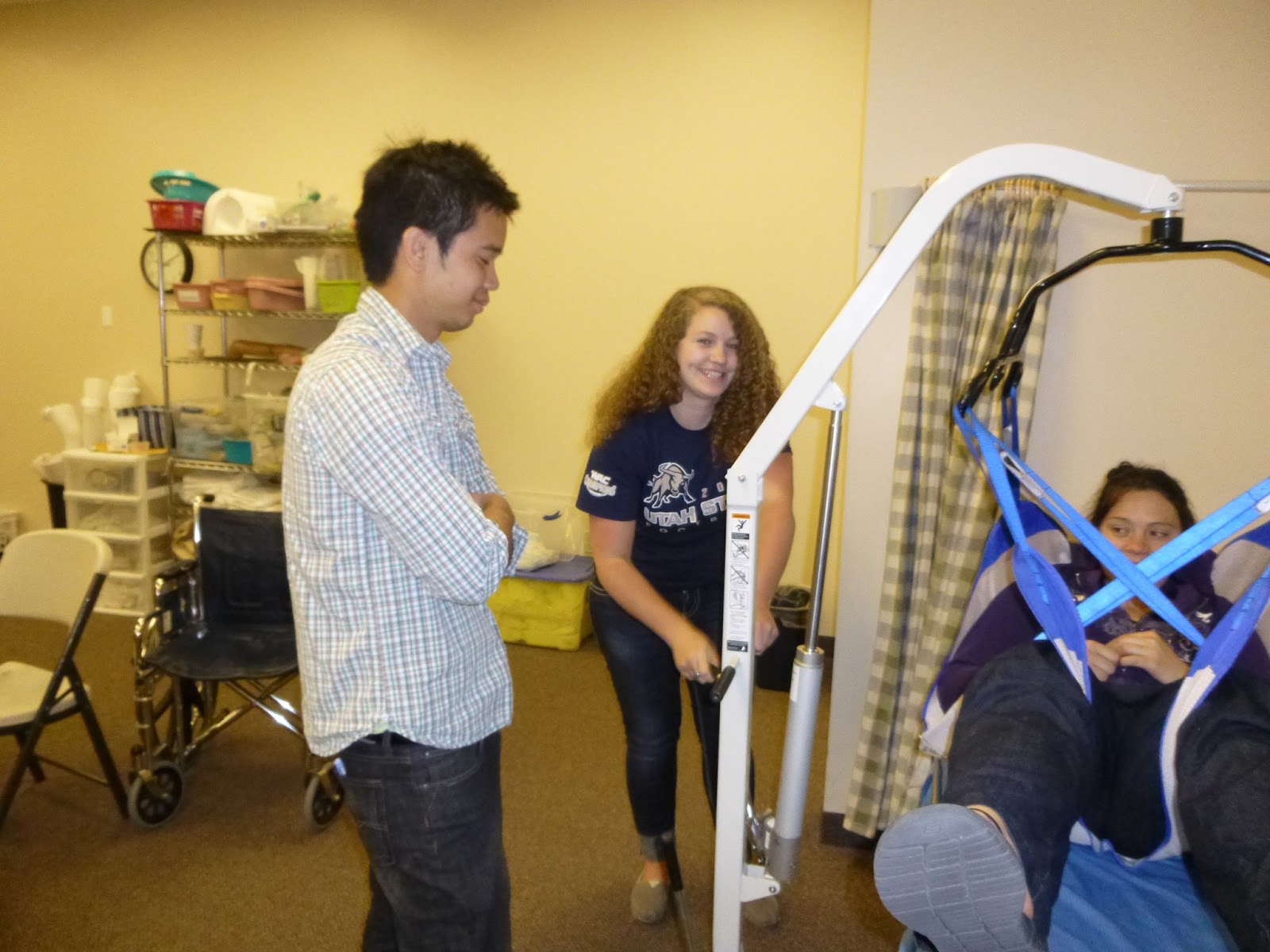
The hoyer lift, always a good time

Utah CNA students at play
CNA class
CNA class Utah
Salt Lake CNA Class
Salt Lake CNA training
Utah CNA schools

Utah CNA students at play
CNA class
CNA class Utah
Salt Lake CNA Class
Salt Lake CNA training
Utah CNA schools

Utah CNA students at play
CNA class
CNA class Utah
Salt Lake CNA Class
Salt Lake CNA training
Utah CNA schools

Utah CNA students at play
CNA class
CNA class Utah
Salt Lake CNA Class
Salt Lake CNA training
Utah CNA schools
Utah CNA students at play
CNA class
CNA class Utah
Salt Lake CNA Class
Salt Lake CNA training
Utah CNA schools